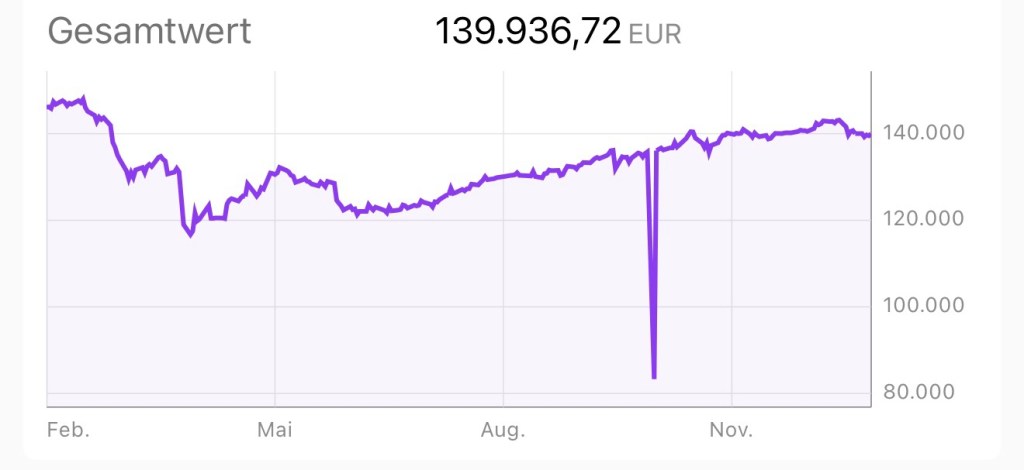
The global financial landscape in January 2026 has been defined by a transition from the “policy shocks” of 2025 toward a period of fundamental “monetary harvesting.” While the start of the year saw record highs in several indices, the market has entered a phase of high-level consolidation as investors weigh robust earnings against elevated valuations.
January 2026 Performance: Reaching New Heights
• USA: The S&P 500 and Nasdaq Composite hit fresh all-time highs in mid-January, momentarily breaching the 7,000 and 26,000 marks, respectively. This was fueled by a solid Q4 2025 earnings season, where AI integration finally began showing significant productivity gains in non-tech sectors. However, momentum slowed late in the month as the Federal Reserve signaled a more “data-dependent” pause after the aggressive cuts of 2025.
• Europe: European markets (DAX, Stoxx 600) outperformed their US peers on a relative basis in early January. The DAX approached the 25,000-point threshold, supported by a recovering industrial sector and cooling inflation, which hit the ECB’s 2% target. Unlike 2025, the Euro remained stable, preventing the “currency trap” that previously eroded US gains for European investors.
• Commodities: Gold surged to new record highs above $5,500/oz in January, acting as a hedge against persistent geopolitical tensions and US deficit concerns.
The 12-Month Outlook: A Broadening Bull Market
As we look toward January 2027, the consensus among major financial institutions (Goldman Sachs, J.P. Morgan) remains constructive, with a projected global equity return of 9–11%.
• USA: The US is expected to remain the global growth engine with a projected GDP expansion of 2.4%. The “AI Supercycle” will likely shift from hardware providers to software and service integrators. However, high concentration in tech remains a risk; a “winner-takes-all” dynamic continues to dominate.
• Europe: A gradual acceleration is expected. Germany is forecast to rebound to 1.2% GDP growth as fiscal stimulus and lower energy costs take hold. European equities remain attractive due to their massive valuation discount (approx. 35%) compared to US peers.
• Monetary Policy: The “Goldilocks” scenario—moderate growth with stable prices—is the base case. While the Fed may implement 1–2 more “fine-tuning” cuts, the ECB is expected to hold rates steady, providing a neutral backdrop for credit markets.
Key Risks
The primary “dark clouds” for the next 12 months are the US fiscal deficit and potential AI-valuation fatigue. If earnings growth fails to justify current multiples, we could see a volatile mid-year correction.
Portfolio Analysis: January 2026
The Gondinero Index Portfolio shows a heavy tilt toward US-centric growth and global diversification, with a combined value of approximately €139,905.
• Vanguard FTSE All-World (€71,569): This is your core stabilizer. With a total performance of +1.69%, it reflects the broader market’s resilience. In January 2026, it benefits from the “monetary harvesting” phase where global earnings begin to justify the valuations of 2025.
• Berkshire Hathaway B (€27,372): Currently down -8.81% overall. This reflects the “Value vs. Growth” struggle of 2025. While Warren Buffett’s firm provides defensive qualities, it lagged during the high-octane AI rallies.
• Invesco NASDAQ-100 (€20,697): Down slightly at -1.09%. As we enter 2026, this position is at a crossroads; it captures the AI software surge but remains sensitive to any “data-dependent” pauses in Fed rate cuts.
• Amundi Smart Overnight (€20,266): Your “dry powder.” With a total return of +0.29%, it serves its purpose as a cash-equivalent hedge against 2026 volatility.
12-Month Outlook
The next year favors a “broadening” market. While 2025 was about a few tech giants, 2026 should see gains spread to the broader sectors within your FTSE All-World holding.
1. US Growth: The NASDAQ-100 should recover as AI implementation boosts corporate margins across the board.
2. The Berkshire Opportunity: Value stocks are expected to catch up in 2026 as investors rotate away from overextended tech multiples.
3. Currency Stability: Unlike 2025, a more stable EUR/USD pair means your US-denominated gains (Berkshire/NASDAQ) should translate more effectively into Euro returns.
 Gondinero Index Financial Education (by Jörg Jorge George Giorgio 🤗)
Leave a comment