After an initial surge in crypto prices following Trump’s return to office — driven by hopes of friendly crypto policies and even a proposed national “crypto reserve” — enthusiasm has faded fast and the rally has collapsed.
The largest crypto, Bitcoin, has lost around 20–30 % from its recent highs. More speculative altcoins and crypto projects tied to the Trump family — including $TRUMP and World Liberty Financial — have fared far worse, some plunging 50 % or more.
Why this turn?
Several factors: first, disappointment over lack of concrete policy or real adoption of the proposed reserve. Second, broader economic headwinds — growing fears around tariffs, inflation and uncertainty — have made investors shy away from high-risk assets.
In short: what began as a wave of optimism and hype has reversed, and crypto markets are now in a sharp correction. Many investors who bought into the “Trump bump” are seeing steep losses — a reminder that crypto remains volatile and vulnerable to macroeconomic and political swings.
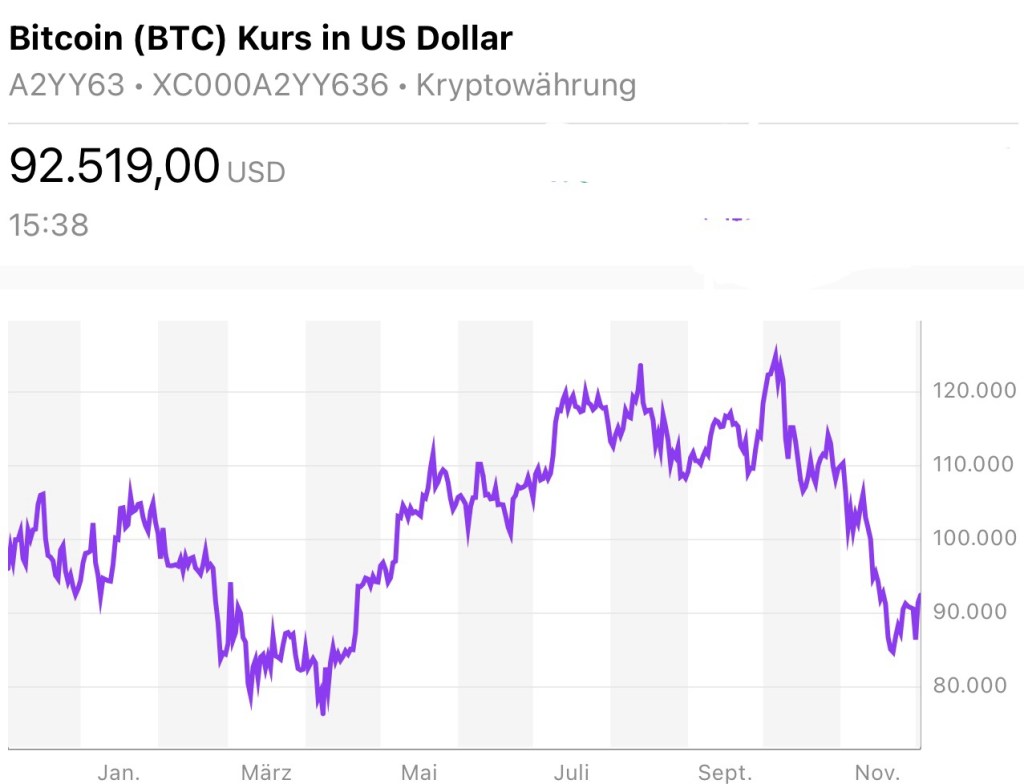
The broader discussion about crypto goes as follows:
Three reasons to enter crypto
1. Digital independence
You’re not tied to a single bank or country. Your money is digital and usable worldwide.
2. High growth potential
Cryptos can rise in value very quickly. Early investors have sometimes seen large gains.
3. Supporting new technology
By buying crypto, you support blockchain technology, which enables new ideas in payments, contracts, and digital ownership.
Three reasons not to enter crypto
1. Extreme volatility
Prices can swing wildly within days. Many beginners underestimate how stressful that can be.
2. Little protection
No central safety net like at a bank. If you make a mistake (wrong address, lost keys), the money is gone.
3. Uncertain regulations
Laws and political decisions can dramatically affect prices. A single regulation or announcement can move the market in one day.
And for me the most important argument against entering crypto and that’s why I will never do it is:
Cryptocurrencies are not backed by real assets
Cryptocurrencies have no underlying real-world value. Unlike shares, they don’t represent ownership of a company. Unlike bonds, they don’t promise future payments. And unlike commodities such as gold, they are not physical objects you can use or process. Their price depends almost entirely on what people believe they are worth.
And be honest to yourself: do you believe in the honesty or in the economic competence of Trump in order to buy his currency?
For supporters, this is not a problem — they argue that value comes from usefulness and trust, not from physical backing. But for skeptics, this makes crypto fragile, because confidence can disappear quickly.
 Gondinero Index Financial Education (by Jörg Jorge George Giorgio 🤗)
Leave a comment